You are standing in front of a sushi menu reading nigiri, maki, inside-out, temaki, futo, sashimi – and you have no idea which is which? Then you are in the right place. In this sushi glossary we explain the difference between nigiri and maki and every other sushi type in plain words, so that at Mami Viet in Leipzig-Lindenau you order exactly what you are in the mood for.
The good news first: you do not need to memorise a Japanese vocabulary list. Almost every sushi menu in the world is built on four basic shapes. Once you understand those, you can read any menu – including ours.
Sushi types explained: the four basic shapes at a glance
Before we go into detail, here is the short version. Everything else is a variation of these:
- Nigiri – an oblong ball of rice with a topping on top, usually fish. No nori on the outside, no roll. One piece, one topping.
- Maki – a roll. Rice and filling are rolled up in a sheet of nori seaweed, then cut into slices. The seaweed is on the outside.
- Inside-Out – the same idea as maki, just wrapped the other way round: rice on the outside, nori on the inside. Often finished with sesame or a topping on the rice.
- Sashimi – not sushi in the strict sense, because the rice is missing. Sashimi is pure, thinly sliced raw fish.
A simple rule of thumb: rice underneath = nigiri. Seaweed outside = maki. Rice outside = inside-out. No rice = sashimi. That will get you through any menu.
And if you want to compare the four shapes side by side, here are the four features that tell them apart instantly:
- Nigiri: rice yes, nori no, shape: a single bite-sized piece, price with us 4–5 €
- Maki: rice yes, nori on the outside, shape: a sliced roll, price with us 4 €
- Inside-out: rice yes (on the outside), nori on the inside, shape: a sliced roll, price with us 8–11 €
- Sashimi: rice no, nori no, shape: plain slices of fish, price with us from 10 €
The difference between nigiri and maki – the two classics compared
The difference between nigiri and maki is what most guests want to know – and it is quickly explained.
Nigiri is a hand-formed ball of rice with a slice of fish or another ingredient laid on top. There is often a hint of wasabi between the rice and the topping. What you taste above all is the ingredient itself, because nothing masks it. If you want to know what salmon or tuna really tastes like, order nigiri. With us you will find Sake Nigiri with salmon and Maguro Nigiri with tuna at 4 € each, plus stronger options such as Unagi Nigiri with eel at 5 €.
Maki is a roll: rice and filling are wrapped in a sheet of nori seaweed and cut into bite-sized pieces. Here you always taste a combination – rice, seaweed and filling together. The nori flavour is far more present than with nigiri. Our Maki Rolls all cost 4 €, for example Sake Maki with salmon, Tekka Maki with tuna or Kappa Maki with cucumber.
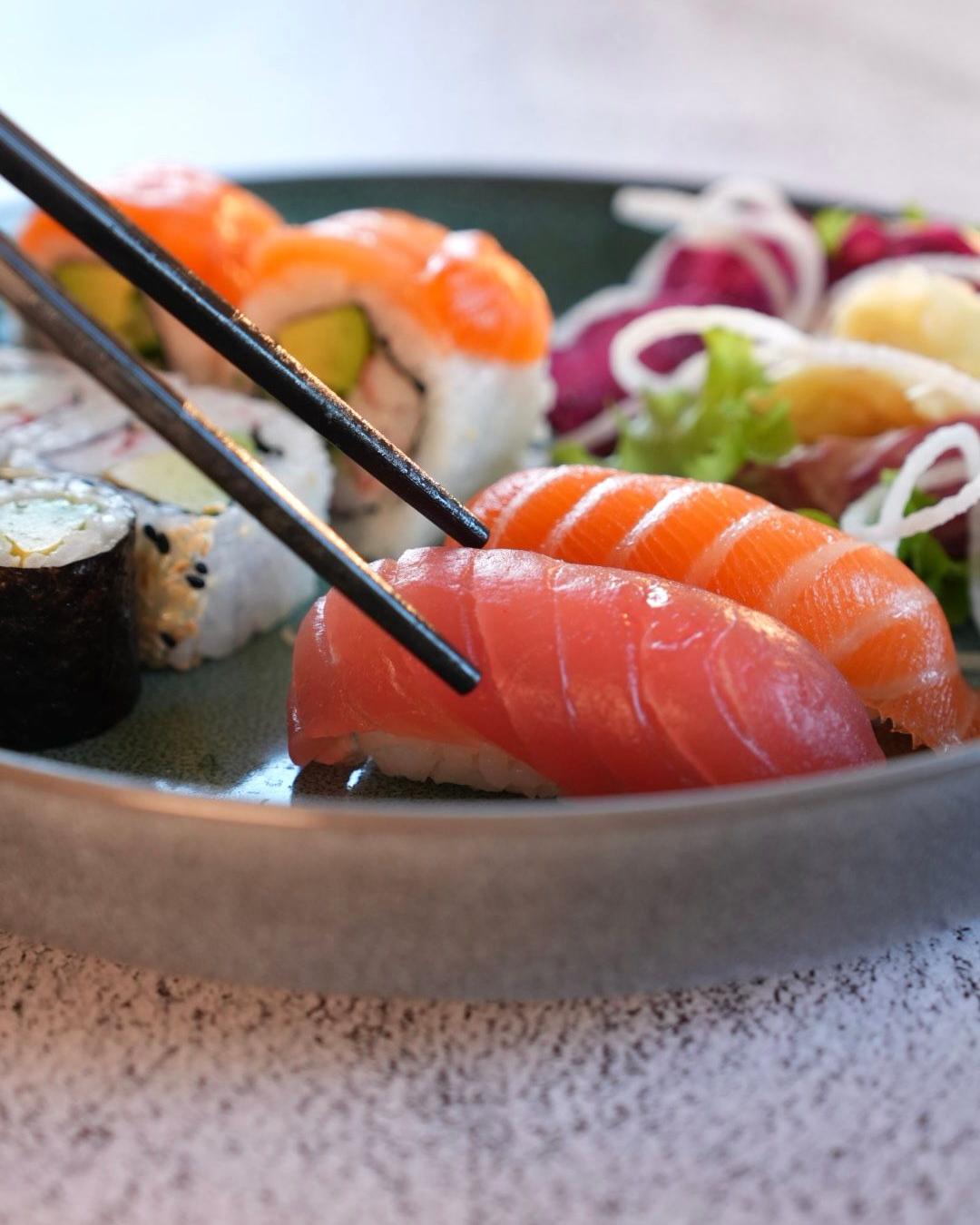
In short: nigiri puts one ingredient centre stage, maki combines several. If you cannot decide, take some of both – that is exactly what the small portion sizes are for.
The maki family: hosomaki, futomaki and temaki
Within the maki category there are differences that mostly come down to thickness and shape:
- Hosomaki – the thin roll, usually with just one filling. These are the classic maki you know from Kanpyo Maki (pickled gourd) or Mango Maki.
- Futomaki – the thick roll with several ingredients at once. With us you will find these in the Futo section from 9 €, such as Mami Veggie Futo (vegetarian) or Mami Tropical.
- Temaki – the hand roll. Instead of a sliced roll you get a nori cone filled with rice and ingredients, which you eat straight from your hand. Our temaki cost 8 €, for example California Temaki or Nigitaro Temaki.
Temaki are especially handy if you are not yet confident with chopsticks – the hand roll is officially meant to be eaten with your fingers.
Inside-out roll: rice outside, seaweed inside
The inside-out roll (also called uramaki) is the shape that is most popular in the West – and for many people the most comfortable place to start. The build is reversed: the nori sits inside around the filling, the rice on the outside. That makes the roll taste milder, because the seaweed does not sit directly on your tongue.
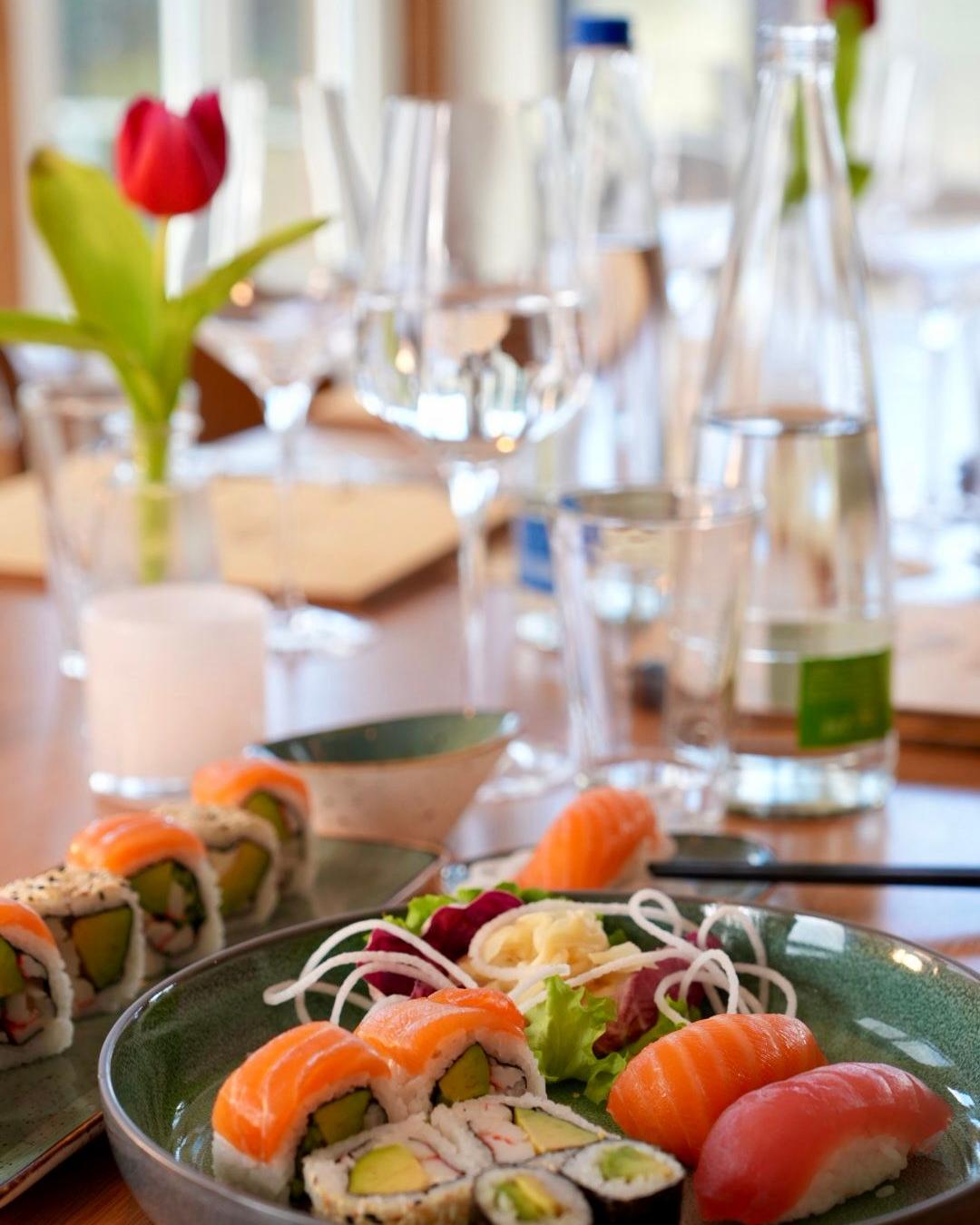
Because the rice is on the outside, the roll can be dressed up further: with sesame, with fish roe, or with a layer of fish on top. Our Inside Out Rolls cost 8 €, including California and Alaska; the more elaborately topped Inside Out Specials cost 11 €, for example Rainbow or Dragon.
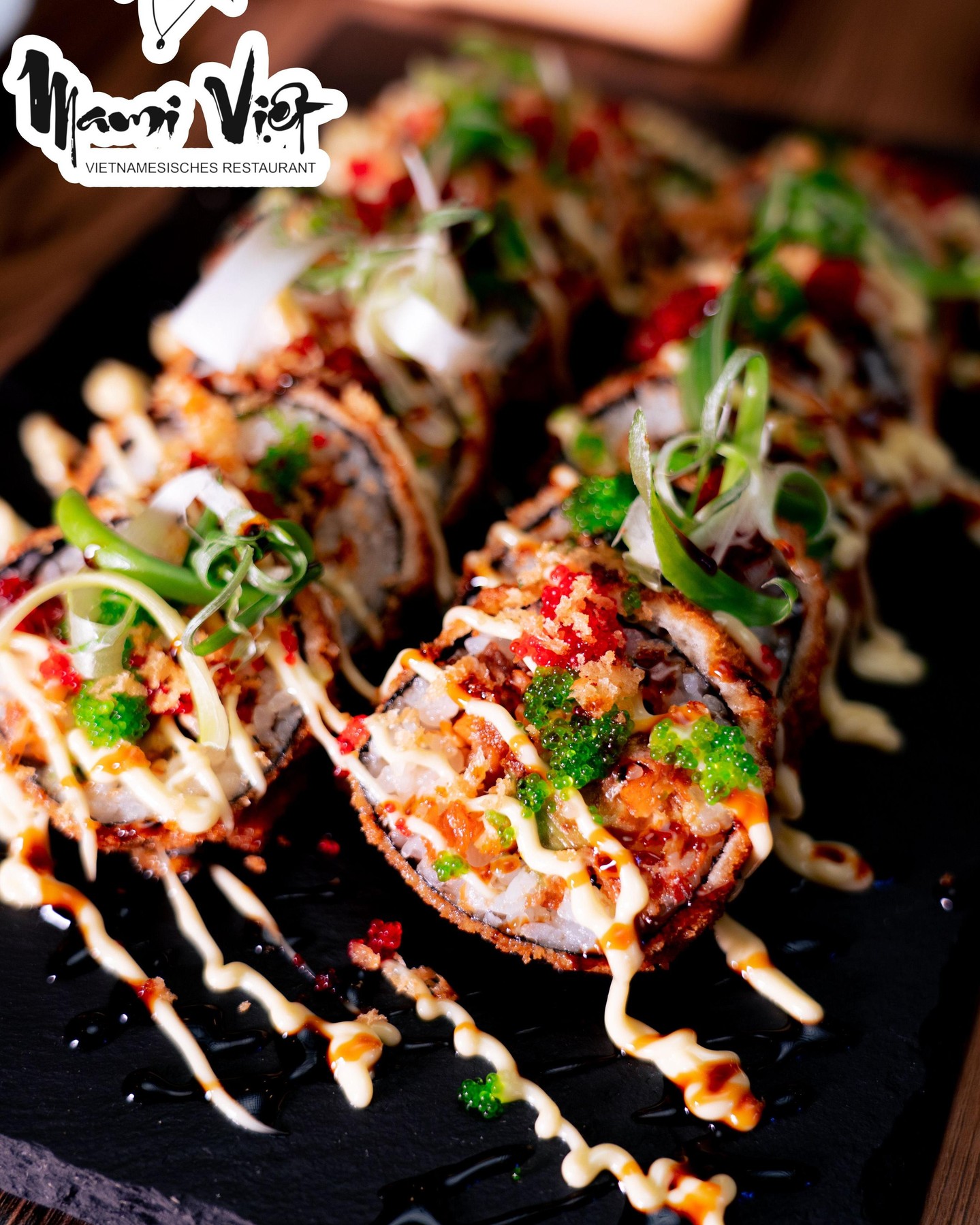
Fried sushi takes it one step further: the roll is breaded and deep-fried, crisp on the outside and soft inside. We serve it from 9 € – for example Crunchy Salmon or the vegetarian Crunchy Veggie. If you do not (yet) like raw fish, this is often the roll that wins you over.
The sashimi difference: pure fish, no rice
Sashimi stands apart because there is no rice at all. It is thin slices of raw fish, cleanly cut and served without extras. That is precisely the sashimi difference when set against sushi: with sushi the seasoned rice is an essential component, with sashimi it is all about the fish.
In practice that means:
- Sashimi is lighter – without rice it fills you up less and is high in protein. Good if you do not want a heavy meal in the evening.
- Sashimi is more honest – the quality of the fish is completely in the foreground, with nothing to disguise it.
- Sashimi is made for sharing – a larger platter in the middle of the table works beautifully for two or more people.
With us you can order Sake Sashimi with salmon or Maguro Sashimi with tuna from 10 €, and for the big moment the Sashimi Mix at 40 €. Incidentally, we explain how raw fish in sushi differs from North German matjes herring in our post Raw fish: matjes vs sashimi.
Vegetarian sushi: which types come entirely without fish
Sushi without fish is not a fallback, it is a category of its own – and a very popular one with us. Every shape explained above also exists in a vegetarian version:
- Vegetarian nigiri: Avocado Nigiri and Inari Nigiri with a sweet tofu pocket, 4 € each
- Vegetarian maki: Kappa Maki with cucumber, Avocado Maki, Shinko Maki with pickled radish, Mango Maki and Inari Maki, 4 € each
- Vegetarian futo and fried rolls: Mami Veggie Futo and Crunchy Veggie, from 9 € each
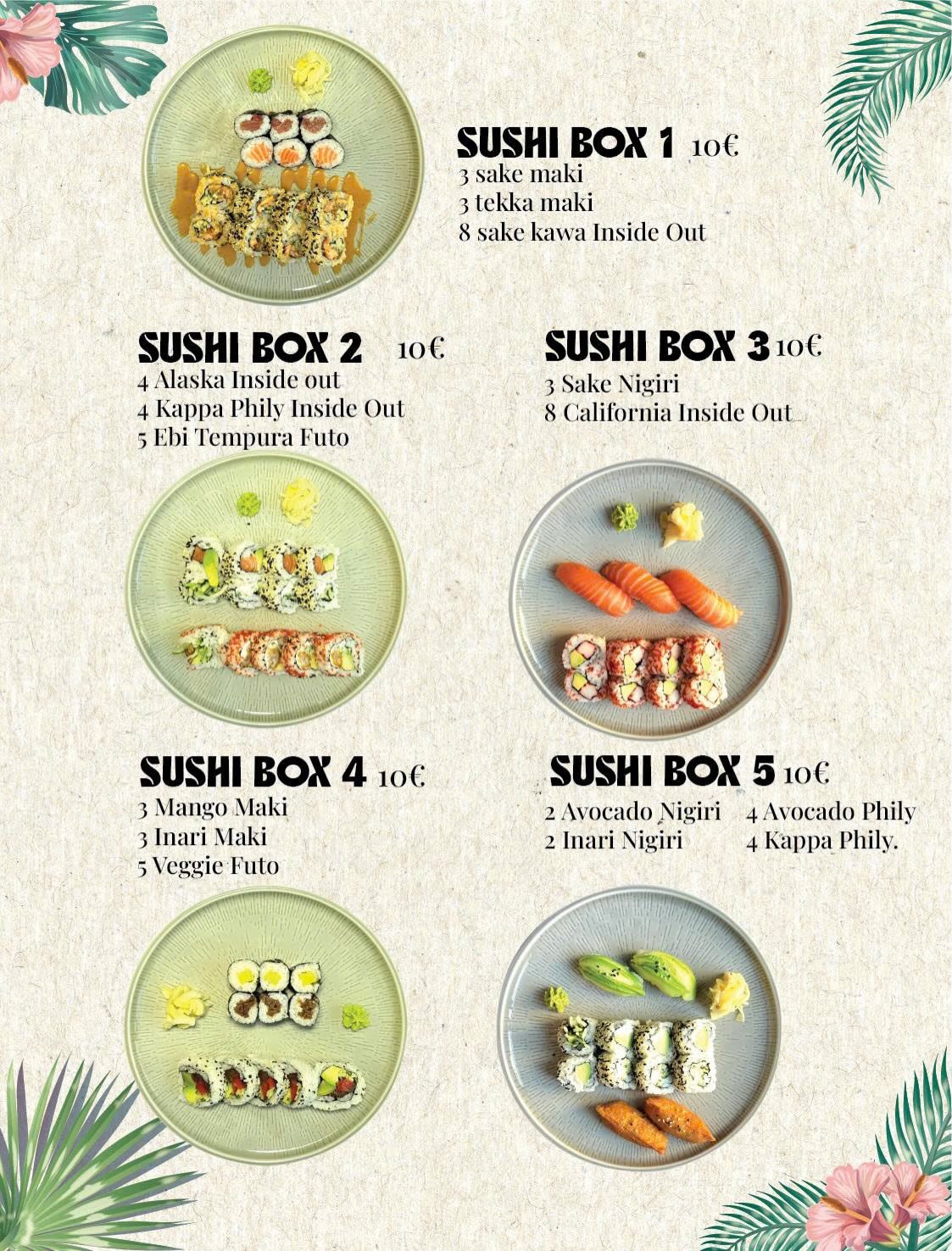
- Ready-made selections: Sushi Box 4 and Sushi Box 5 are vegetarian at 10 € each; Sushi Menu 1 and Sushi Menu 2 are vegetarian too, from 12 €
If there’s something you can’t tolerate, just tell us when you order – our team will help you choose. You can find more about our meat-free options in the post Eating vegetarian in Leipzig.
A short ordering guide: what suits whom?
Now that you know the terms, ordering becomes easy. A few rules of thumb from our everyday service:
- You like it pure and want to taste the fish: nigiri or sashimi
- You want to try many varieties: a Sushi Box at 10 € or a Sushi Menu from 12 €
- You like it mild and are not keen on nori: Inside Out Rolls at 8 €
- You like it boldly seasoned and crunchy: fried sushi from 9 € or an Inside Out Special at 11 €
- You eat vegetarian: Sushi Box 4 or 5, both 10 €
- You are a table of two and like to share: a larger Sushi Menu or a Sashimi Mix platter
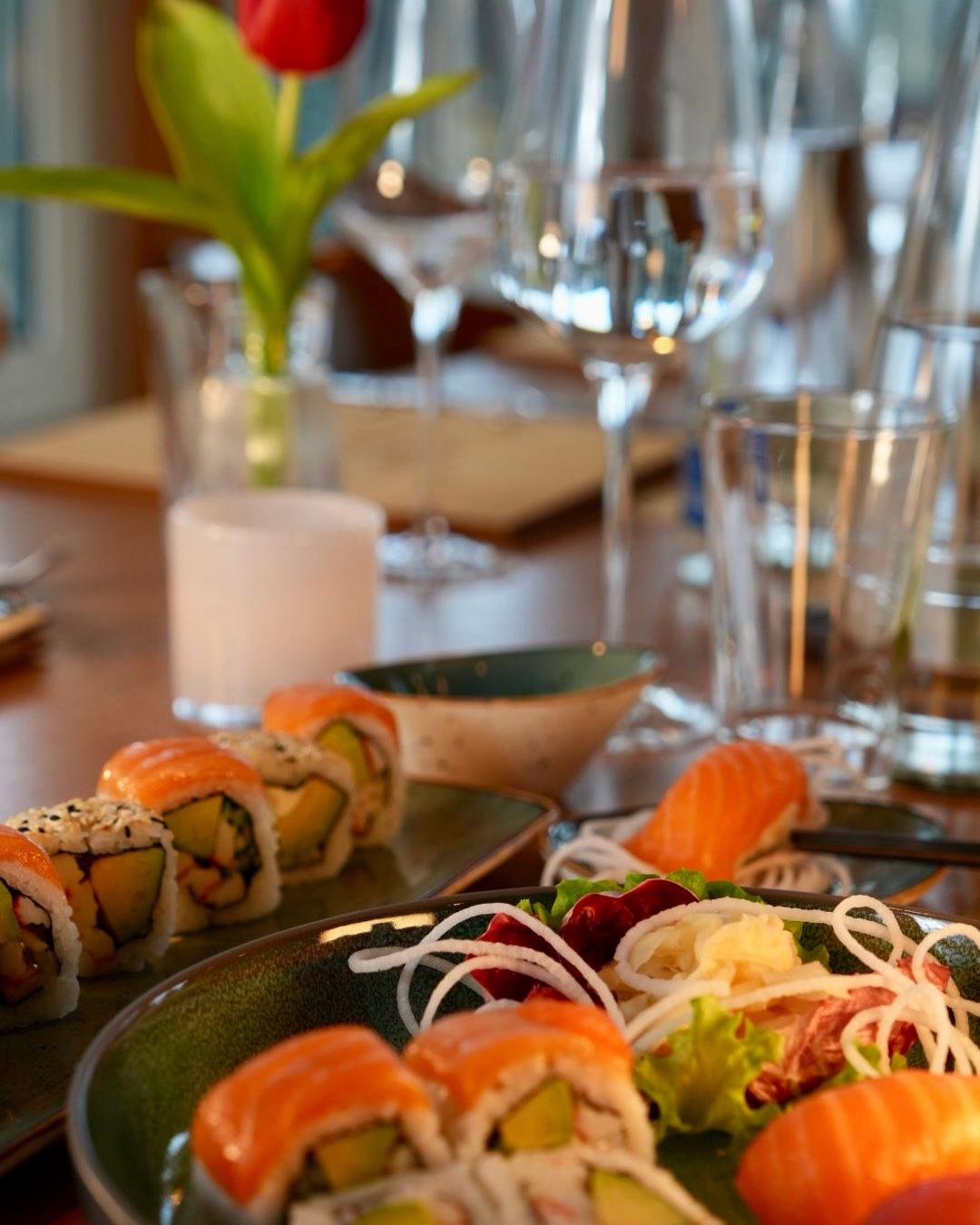
For a first visit, eight to twelve pieces or one box per person is usually plenty – you can always order more. And if you are unsure: our team at the sushi counter is happy to explain what is behind a name.
The sushi glossary in practice: at Mami Viet in Leipzig-Lindenau
The difference between nigiri, maki and sashimi is best learned straight off the plate. You will find us at Merseburger Str. 107, 04177 Leipzig, in Leipzig-Lindenau / Altlindenau near Lindenauer Markt. We are open daily from 11:00–14:00 and 17:00–22:00.
🅿️ There are plenty of free parking spaces right outside the restaurant – so you do not have to circle the neighbourhood before you can settle in and read the menu.
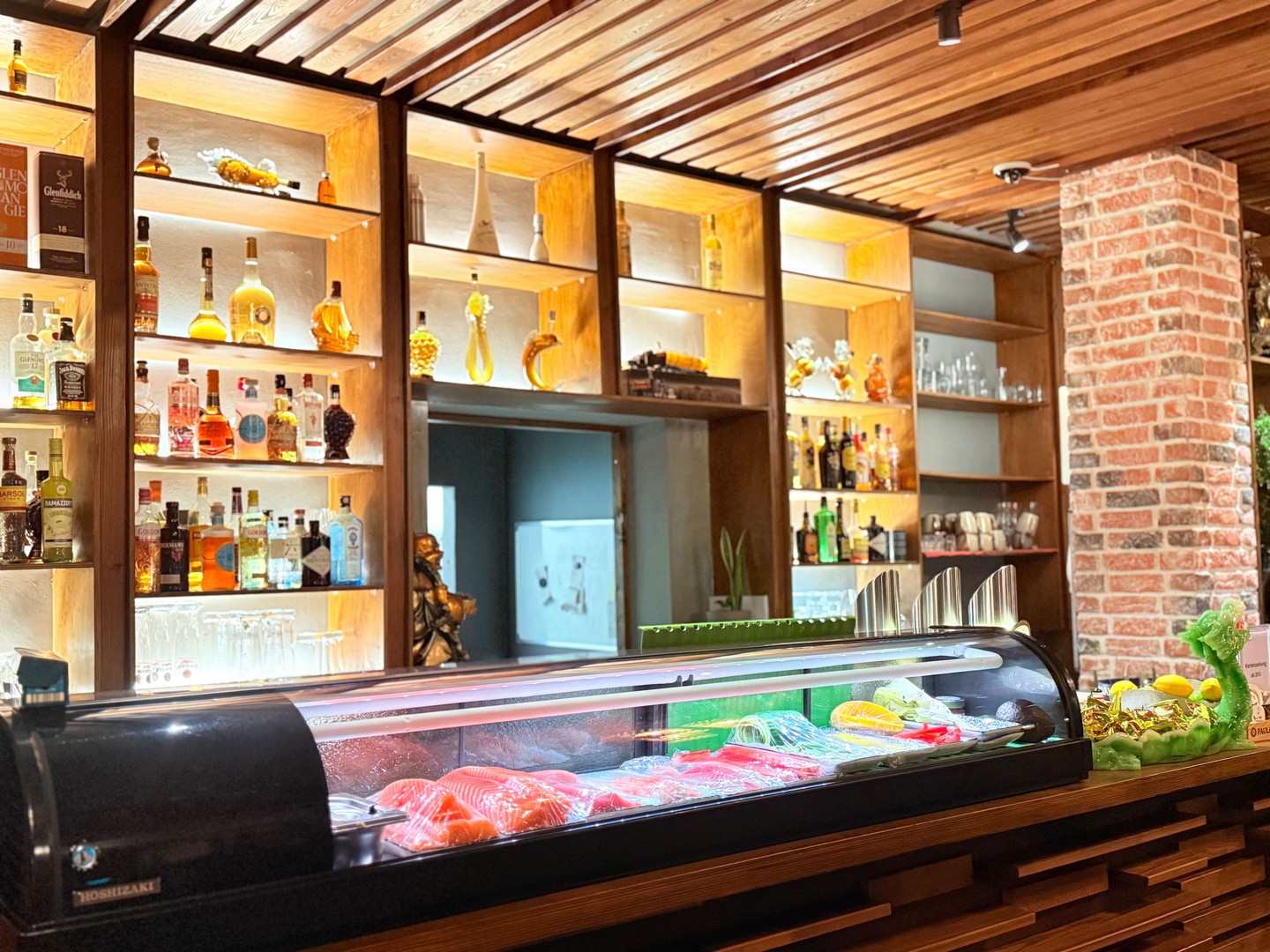
You can reserve indoors at the sushi counter or outside: we have two outdoor areas, the street-side terrace and the quiet courtyard garden. Between 17:00–18:30 and 20:30–22:00 our happy hour from 5 € runs with cocktails, wine, long drinks, aperitifs and spritz – a good match for a shared sushi platter. At lunchtime, from 11:00–14:00, our lunch menu costs 10 € including mini spring rolls, and that includes Sushi Boxes 1 to 5. Ordering for pickup or delivery goes directly through restaurant-mamiviet.com.
FAQ: sushi terms in brief
What is the difference between nigiri and maki?
Nigiri is a hand-formed ball of rice with a topping on top and no seaweed on the outside. Maki is a roll in which rice and filling are wrapped in a sheet of nori and then sliced.
What does inside-out mean?
Inside-out (uramaki) describes a roll with the rice on the outside and the nori seaweed on the inside. It therefore tastes milder and is often finished with sesame or a topping.
Is sashimi also sushi?
Strictly speaking, no. Sushi always refers to the seasoned rice. Sashimi consists only of thinly sliced raw fish, entirely without rice.
What is the difference between hosomaki and futomaki?
Hosomaki is the thin roll, usually with a single filling; futomaki is the thick roll with several ingredients. You will find our thick rolls in the Futo section.
What is temaki?
Temaki is a cone-shaped hand roll made of nori, filled with rice and other ingredients. It is not sliced and is eaten straight from the hand.
Is there vegetarian sushi?
Yes, in every shape: vegetarian nigiri such as avocado and inari, maki with cucumber, mango or pickled radish, plus inside-out rolls and the vegetarian Sushi Boxes 4 and 5 at 10 € each.
Do I have to eat sushi with chopsticks?
No. Nigiri and temaki are traditionally eaten with your fingers. Chopsticks are more practical for rolls, but they are not compulsory.
Should I dip nigiri in soy sauce?
If you like, briefly and with the fish side down. If you dip the rice, it soaks up the sauce and the piece falls apart more easily.
Is there free parking at Mami Viet?
Yes, there are plenty of free parking spaces right outside the restaurant at Merseburger Str. 107.
Can I pay by card?
Yes, from a bill of 20 € upwards. Below that, please pay in cash.
What if I have a food intolerance?
Just tell us when you order – our team will tell you what is in the dishes and help you choose.
Now try them for yourself
Nigiri, maki, inside-out or sashimi – once you know the four basic shapes, the sushi menu suddenly becomes very clear. The best approach is to try your way across it: a box, a few nigiri and a piece of sashimi for comparison. We are happy to help you choose – in Leipzig-Lindenau, with free parking right outside the door.
We look forward to seeing you – your team at Mami Viet, Sushi & Asian Cuisine in Leipzig-Lindenau. Last updated: September 2026.
Mami Viet – Sushi & Asian Cuisine
Merseburger Str. 107, 04177 Leipzig (Lindenau / Altlindenau)
Phone: 0341 4925 2244
Website: restaurant-mamiviet.com
Opening hours: Mon–Sun 11:00–14:00 & 17:00–22:00