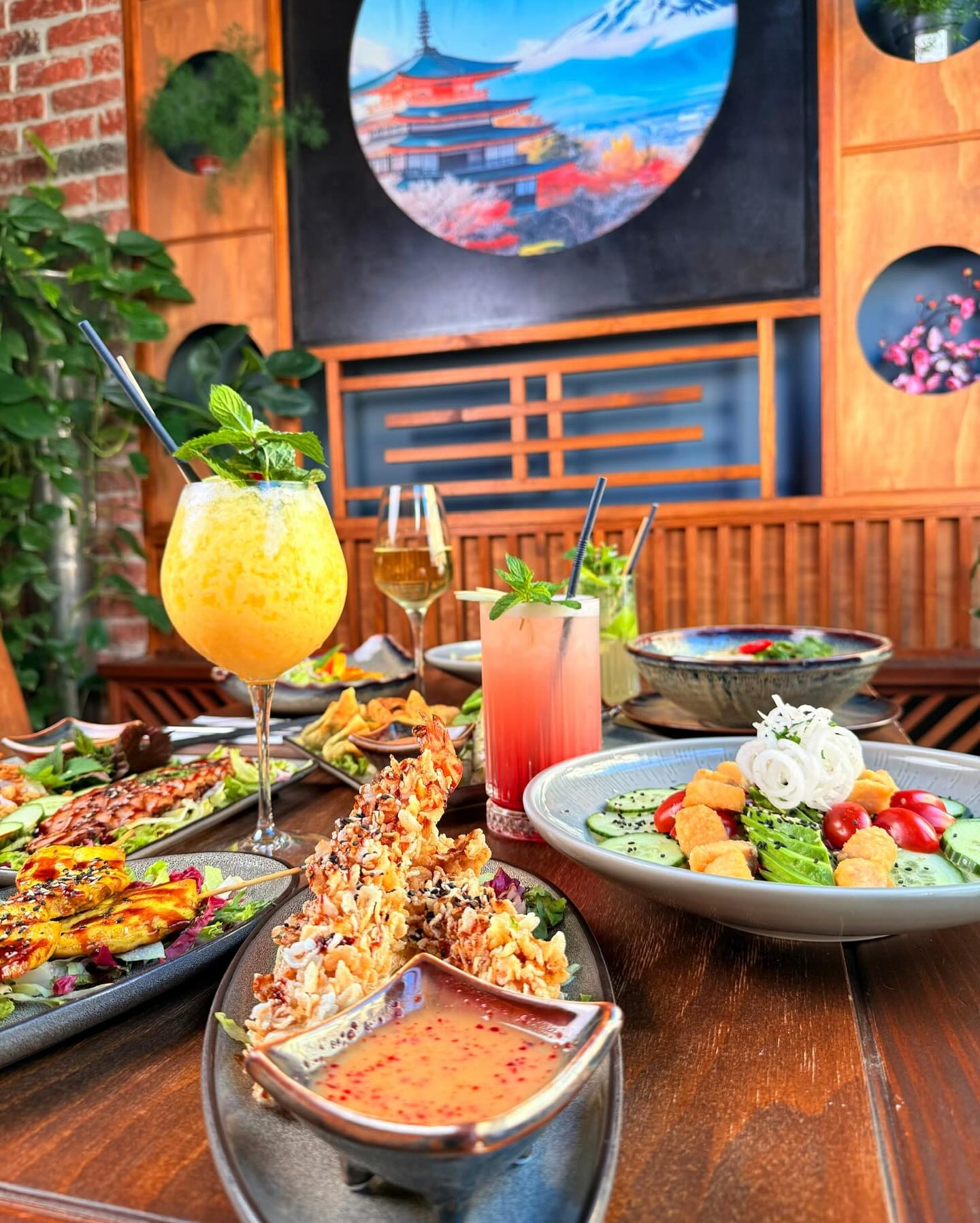
You want to go out for Vietnamese food, but the menu reads like a foreign language? Pho, Bun, Nem, Xao – at first it feels like guesswork. Yet Vietnamese cuisine is one of the most approachable cuisines there is: fresh, light, herb-led and rarely over-seasoned. Once you know a few basic rules, you’ll order without a single question mark in your head.
In this post we explain Vietnamese cuisine from the ground up: which ingredients keep coming back, which dishes you should know, how to eat them properly – and what all of that has to do with our restaurant in Leipzig-Lindenau. At Mami Viet on Merseburger Str. 107 you get Vietnamese cuisine and fresh sushi under one roof, right near Lindenauer Markt.
This isn’t a cooking class. It’s the orientation you’re missing before you sit down.
What defines Vietnamese cuisine
If you had to boil Vietnamese cuisine down to a single idea, it would be this: balance instead of force.
A good Vietnamese dish is rarely just salty, just spicy or just sweet. It combines several taste directions at once – sweet, sour, salty, bitter and savoury – and adds contrasts in temperature and texture on top. Hot noodles meet cold, crunchy salad. Tender meat meets roasted peanuts. A clear, hot broth meets raw herbs you add yourself at the table.
Three things follow from that, and you’ll notice them immediately:
- It’s light. Vietnamese cuisine works with broths, steaming and quick stir-frying in the wok instead of thick, flour-bound sauces. You leave full, not heavy.
- It’s fresh. Raw herbs, salad, sprouts and cucumber belong to many dishes – not as decoration, but as an ingredient.
- It’s usually not spicy. Chilli often comes on the side so everyone can dose it themselves. If you prefer things mild, you’re in good hands here.
That’s exactly where it differs from its neighbours: Thai food is usually hotter and leans on coconut milk and curry pastes, Chinese food is often heartier with soy sauce and sweet-and-sour sauces. We’ve sorted that out in detail in Vietnamese, Thai or Chinese? – if you want to know which Asian cuisine suits your taste, start there.
Another reason for the lightness: Vietnam is a long, narrow country with coastline along almost its entire length. Fish, seafood, rice from the deltas and year-round fresh herbs aren’t a speciality there – they’re everyday life. That still shapes the cooking today.
The key ingredients: rice, rice noodles, herbs and fish sauce
Understand these four building blocks and you’ll understand almost any Vietnamese menu.
Rice and rice noodles
Rice is the base – as a side, as fried rice, or processed into rice noodles. And not all rice noodles are the same:
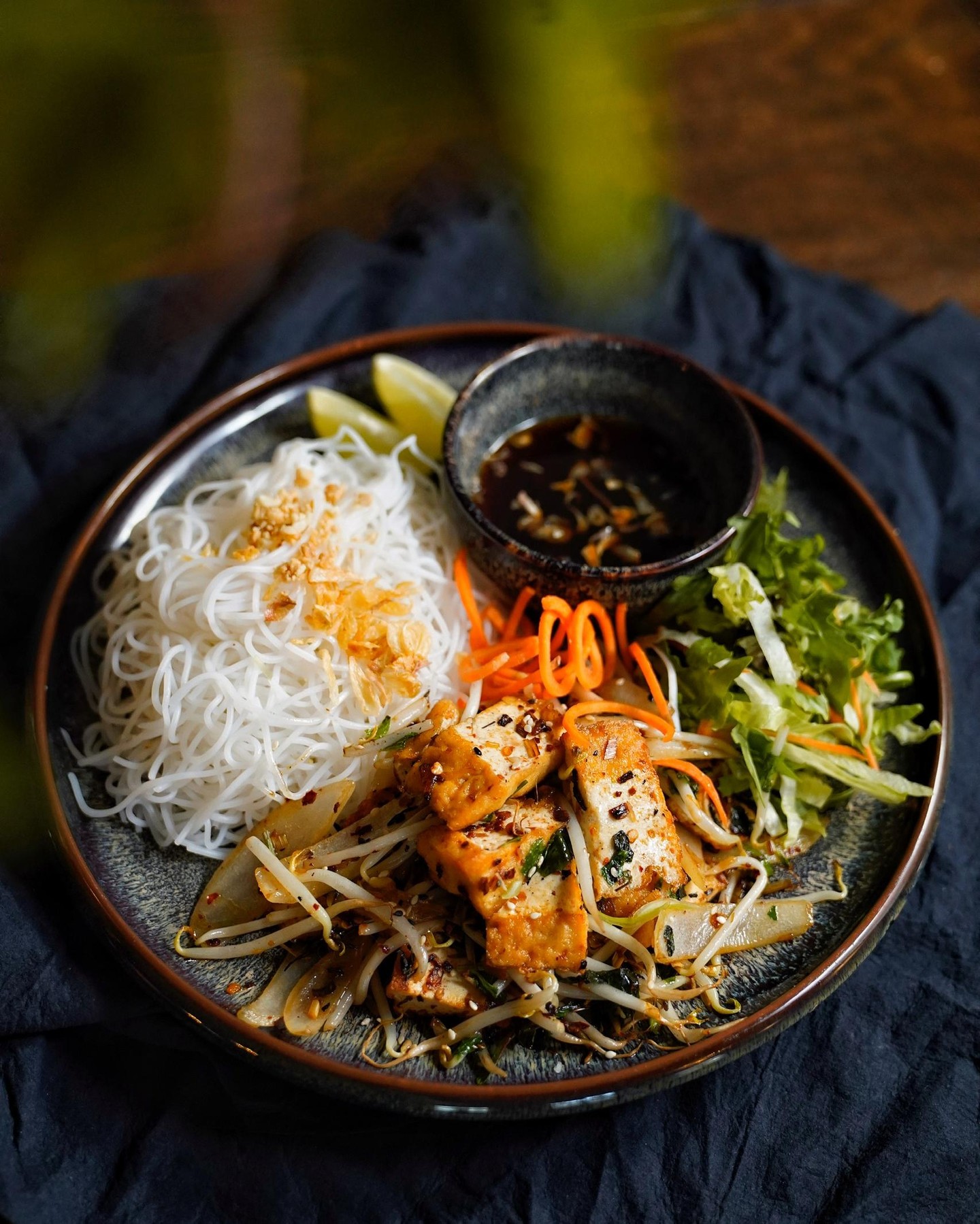
- Bun – thin, round, white rice noodles. Served cold or lukewarm in bowls with salad, herbs and sauce. You’ll recognise them by their spaghetti-like shape.
- Banh Pho – flat, wide rice ribbon noodles. These are the noodles in Pho soup.
- Rice paper – paper-thin dried sheets made from rice flour. Rolls are wrapped in these.
Rice noodles are naturally gluten-free and noticeably lighter than wheat noodles. That’s why a big bowl of Bun fills you up without slowing you down.
Fresh herbs
The herbs of Vietnamese cuisine aren’t an accessory – they’re the reason everything tastes so fresh. Typical ones are coriander, mint, Thai basil, perilla, spring onions and lemongrass. Important: they often go in raw, right before eating. That’s why many dishes arrive with herbs on top or on a separate plate beside them.
If you really don’t like coriander, just say so when you order. That’s completely normal and can almost always be adjusted.
Fish sauce (Nuoc Mam)
Fish sauce is the salt of Vietnamese cuisine. It’s made by fermenting anchovies with sea salt over months. Neat, it smells intense – but in a dish you don’t taste it as “fishy” at all, you taste a rounded, salty depth. Exactly what soy sauce or a strong stock does in many European kitchens.
Most of the time you won’t meet fish sauce neat, but as Nuoc Cham: diluted with water, lime, sugar, garlic and chilli. That’s the typical pale, lightly sweet-and-sour dipping sauce served with rolls, Bun bowls and grilled dishes. Ours is house-made.
And what else belongs
Ginger, garlic, lime, peanuts, star anise, cinnamon and cardamom (especially in broths), soy sauce, bean sprouts, pak choi and Chinese cabbage. Sugar is used, but sparingly – to balance, not to sweeten.
The best-known Vietnamese dishes – and what’s in them
Now to the menu. These dish families cover most of Vietnamese cuisine.
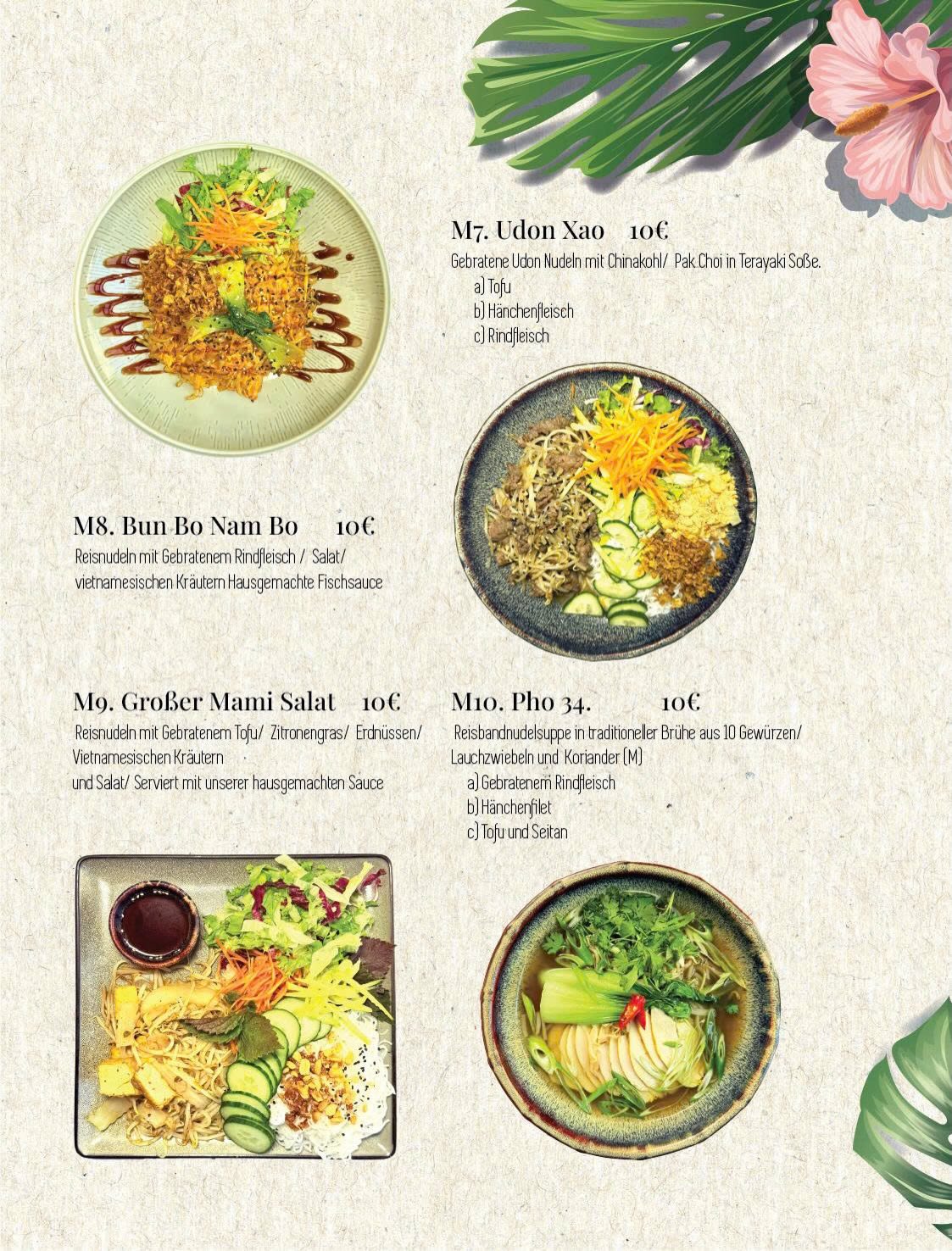
Pho – the rice ribbon noodle soup. Vietnam’s most famous dish. A clear broth simmered for hours with spices such as star anise, cinnamon and cardamom, plus flat rice ribbon noodles, spring onions and coriander. Our Pho 34 (€15) is served in a traditional broth made from ten spices – with fried beef, chicken fillet, or with tofu and seitan. How to eat a Pho properly and what the “34” means is explained in our post Pho in Leipzig.
Bun – the rice noodle bowl. Cold or lukewarm Bun noodles in a bowl, topped with grilled or fried items, plus salad, herbs, cucumber, peanuts and dipping sauce. Everything is mixed before eating. On our menu you’ll find Bun Bo Nam Bo (€15) with beef, Bun Nem (€15) and Bun Vit Nuong (€19).
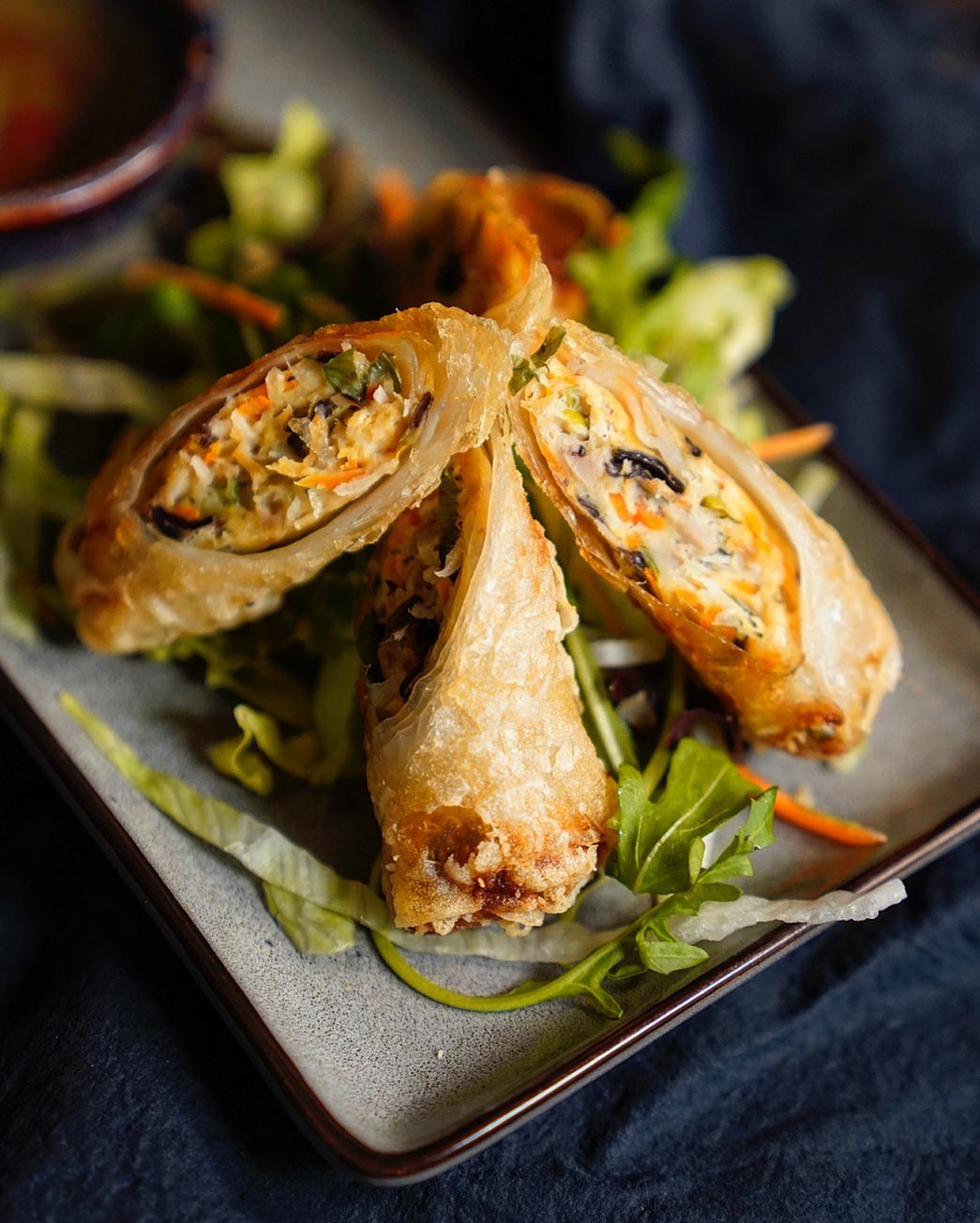
Rolls – fresh or fried. Two completely different things that get confused all the time: summer rolls (€6) are unfried, wrapped in soft rice paper and served cold. Spring rolls (€6) are deep-fried, crispy and warm. Which one suits you is settled in our post Summer rolls vs. spring rolls.
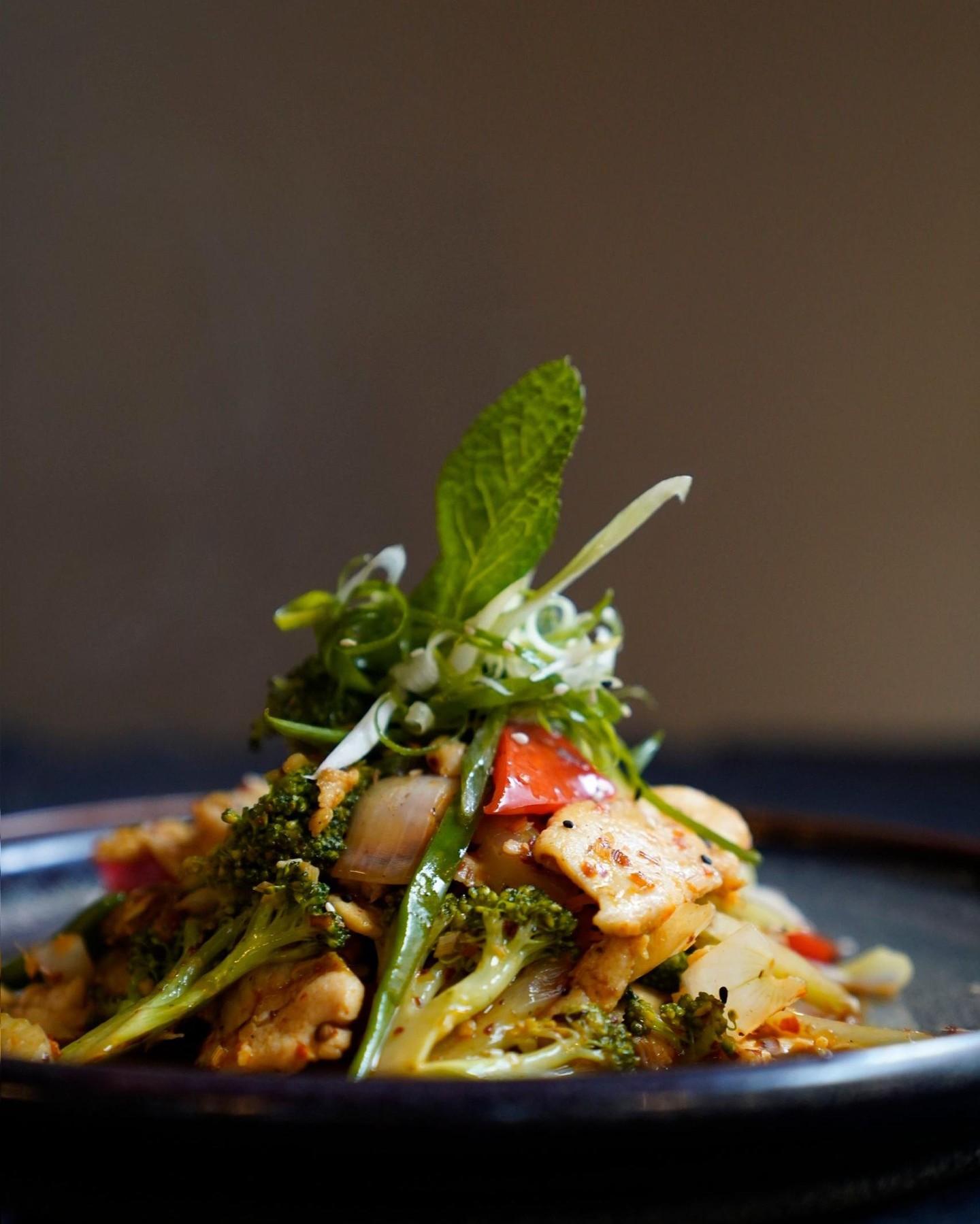
Xao – from the wok. “Xao” means fried. Everything is tossed briefly over high heat so the vegetables keep their bite. On our menu: Udon Xao (from €15) with Chinese cabbage and pak choi in teriyaki sauce, Xao Sa Ot (€15) with lemongrass and chilli, and Xao Tieu Xanh (€15) with green pepper.
Curry – but different. Vietnamese curry is milder and thinner than the Indian or Thai version, often with coconut milk and braised vegetables. It has nothing in common with German Currywurst apart from the name – as explained in Vietnamese curry vs. Currywurst.
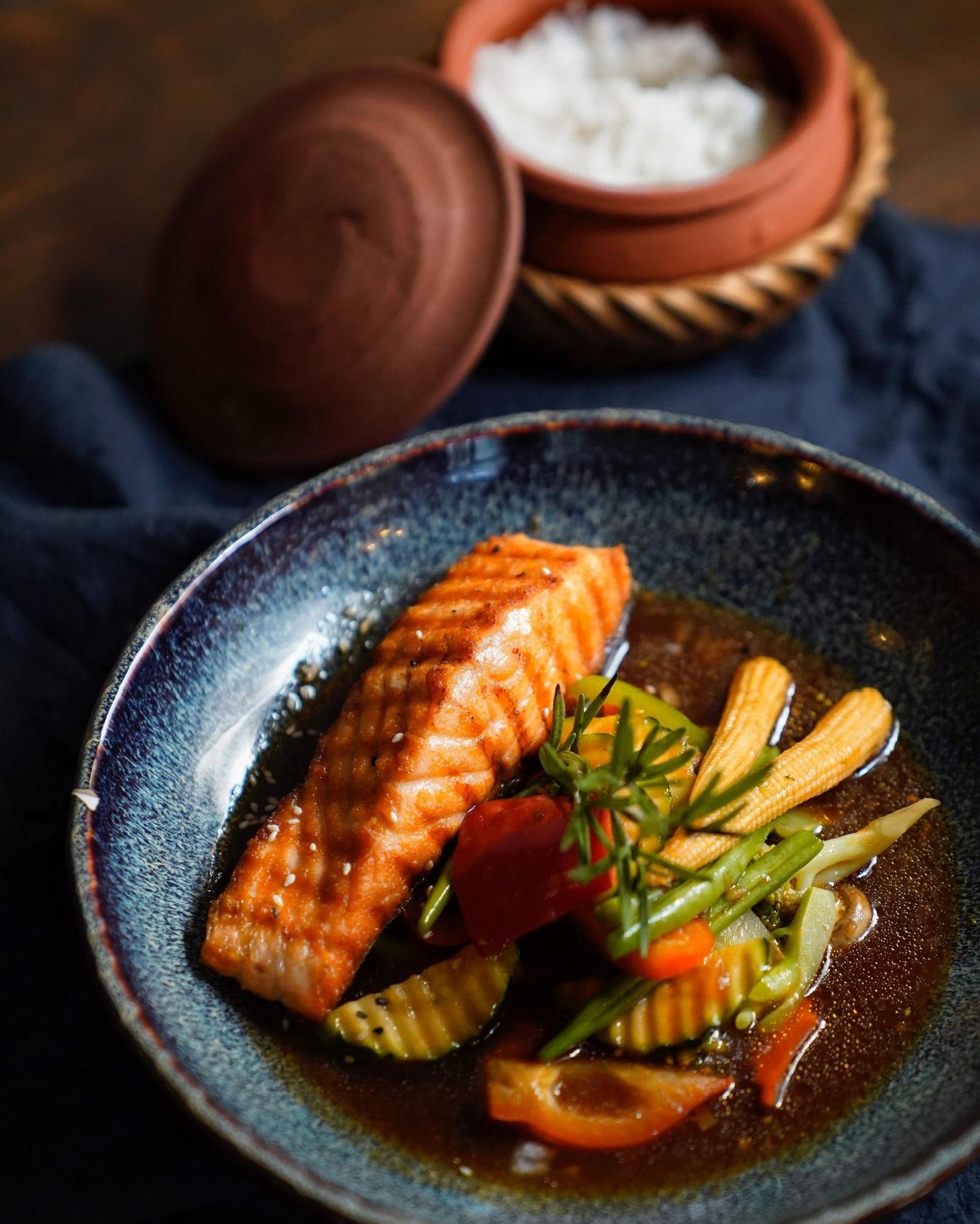
Grilled dishes and rice plates. Grilled skewers, grilled meat, fish with rice: the most everyday side of the cuisine. At our place, for example grilled salmon fillet (€20), grilled prawns (€21) or Mamis Fried Rice (from €15).
How to eat Vietnamese food: chopsticks, sharing and dipping sauces
This is where most guests make the same small mistakes the first time. No drama – but it simply tastes better once you know.
1. Mixing is allowed, in fact it’s expected. A Bun bowl arrives neatly arranged in zones: noodles here, meat there, salad beside it. That’s not a work of art, that’s an assembly instruction. Pour the sauce over it and mix everything thoroughly before you start. Only then does every bite carry the full combination of sweet, sour, salty and savoury.
2. Herbs go in last. With soups, add the fresh herbs and sprouts to the hot broth once it’s in front of you. The heat draws out the aroma without cooking the herbs to death.
3. Spoon and chopsticks work together. With Pho: chopsticks in one hand for noodles and toppings, spoon in the other for the broth. Alternate between them. And yes – slurping the noodles is fine.
4. Dipping sauces are for dipping, not for drowning. The pale Nuoc Cham sauce is deliberately thin. You dip briefly; you don’t pour.
5. Order for the table, not for the person. Vietnamese food is traditionally eaten together: several dishes in the middle, everyone helps themselves. So for two or four people it’s worth ordering different things and sharing. For beginners that’s the best way to try a lot – for example a Mixed Starter Platter (€14) in the middle, then two or three main courses.
6. Try new things, but step by step. If you’re unsure, start with a noodle soup or a wok dish – both are familiar enough. You can test raw fish later; if the thought puts you off, our post Raw fish: Matjes vs. sashimi will ease you in.
Vietnamese vegetarian: more than just a side dish
Vietnamese cuisine is practically built for vegetarian eating. Vegetables, rice, rice noodles, herbs and tofu are the base anyway – so nothing is taken away, things are simply swapped.
At Mami Viet there’s a dedicated Vegetarian Main Courses category:
- Mamis Tofu (€15)
- Garten Gold (€15)
- Mamis Veggie Reis (€15)
- Großer Mami Salat Veggie (€15)
Add to that vegetarian starters such as summer rolls (€6), gyoza (€6), dumplings mix (€6) and edamame (€6), vegetarian salads such as Mami green Salat (€8), vegetarian sushi rolls (avocado, kappa, inari, mango – €4 each) and two fully vegetarian sushi set menus. Pho 34 also comes in a version with tofu and seitan.
If there’s something you can’t tolerate, just tell us when you order – our team will help you choose. More options and details are in our post Vegetarian food in Leipzig.
Eating Vietnamese in Leipzig: how to find the right place
Search for the best Vietnamese in Leipzig and you’ll mostly find opinions. More useful than a ranking are a few concrete signs of a kitchen that takes Vietnamese cooking seriously:
- Fresh herbs are visible. If coriander, mint and sprouts arrive as part of the dish and not just as garnish, you’re on the right track.
- The broth is clear, not cloudy. A good Pho broth is translucent and tastes of spices, not of a stock cube.
- There’s a house-made dipping sauce. Nuoc Cham made in-house is a good sign.
- The menu is manageable. A hundred dishes from five countries is rarely a promise of quality.
- Vegetarian food stands on its own. A dedicated category instead of “dish X without meat”.
At Mami Viet in Leipzig-Lindenau / Altlindenau you get exactly that: Vietnamese cuisine with house-made sauces and fresh herbs – complemented by fresh sushi and poke bowls (€20) from the sushi counter. So you don’t have to choose between warm, savoury cooking and light raw fish.
Handy for everyday life: our lunch menu runs daily from 11:00 to 14:00 at €10 per main course, including mini spring rolls – with Pho 34, Bun Bo Nam Bo, Udon Xao, Mamis Curry, Mamis Reis, the Großer Mami Salat and sushi boxes to choose from. Details in our post on the lunch offer at Mami Viet.
In the evening there’s also happy hour from 17:00 to 18:30 and from 20:30 to 22:00 with cocktails, wine, long drinks, aperitifs and spritz from €5.
How to find us in Leipzig-Lindenau
Mami Viet is at Merseburger Str. 107, 04177 Leipzig, in Leipzig-Lindenau / Altlindenau, near Lindenauer Markt. We’re open daily Mon–Sun from 11:00–14:00 and 17:00–22:00.
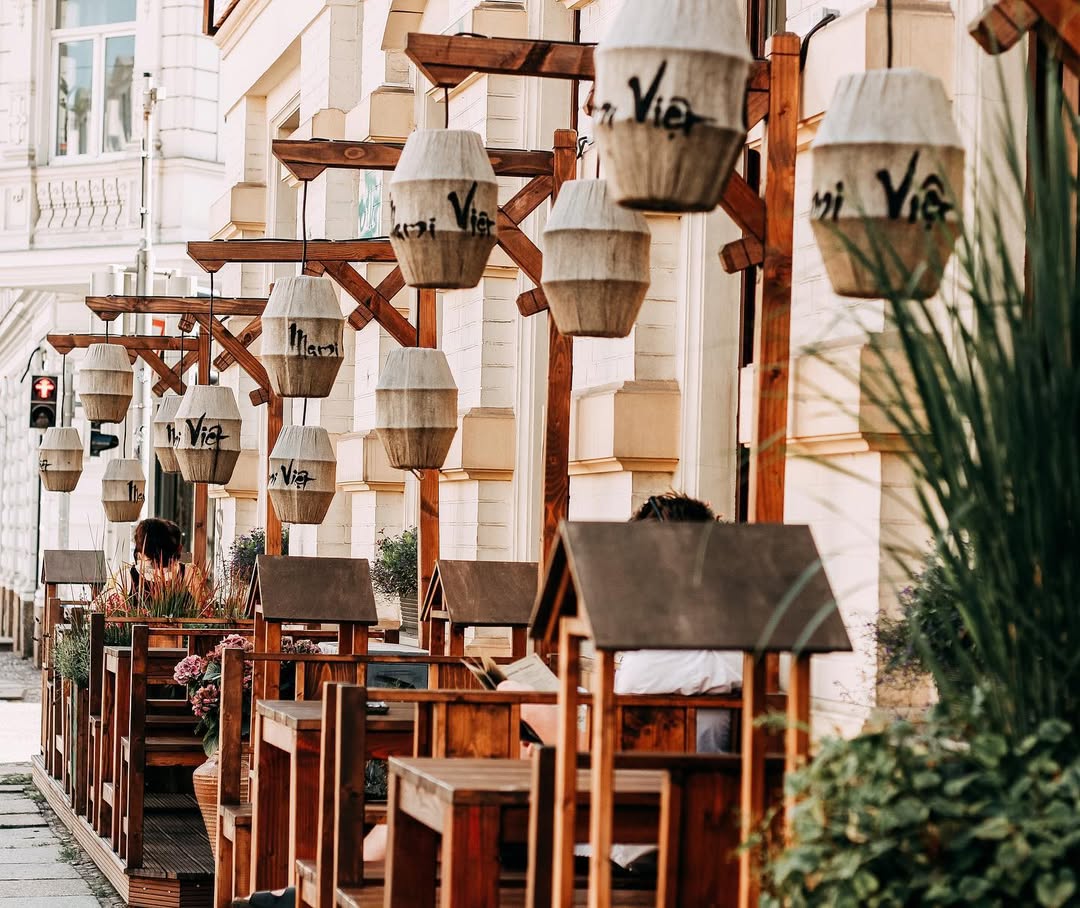
🅿️ There are free parking spaces directly in front of the restaurant – so no hunting for a ticket machine and no circling the block. If you prefer sitting outside, you have two options: the street-side terrace or the quiet backyard garden with lanterns.
You can reserve by phone on 0341 4925 2244 – indoors or in the garden, small groups included. Payment is by cash or card from €20. A high chair for the little ones is available. You’ll find the full menu with all dishes and prices at restaurant-mamiviet.com/menu; you can also order and collect directly through our website.
FAQ about Vietnamese cuisine
What is typical of Vietnamese cuisine?
Fresh herbs, rice and rice noodles, clear broths, fish sauce and a balance of sweet, sour, salty and savoury. Dishes are steamed, simmered or quickly wok-fried rather than heavily deep-fried.
Is Vietnamese food spicy?
Usually not. Vietnamese cuisine is aromatic but rarely hot by default – chilli often comes on the side so you can dose it yourself. Spicier is almost always possible on request.
What is fish sauce and can you taste it?
Fish sauce (Nuoc Mam) is made by fermenting anchovies with sea salt. In a finished dish it doesn’t taste fishy; it gives a rounded, salty depth – much like soy sauce does in other cuisines.
What’s the difference between Pho and Bun?
Pho is a hot soup with flat rice ribbon noodles in a clear spiced broth. Bun are thin, round rice noodles served cold or lukewarm in a bowl with salad, herbs and dipping sauce.
Is Vietnamese cuisine healthy?
It’s considered one of the lightest in Asia: lots of vegetables, fresh herbs, rice and rice noodles, little deep-frying and hardly any thick sauces. That’s why you usually feel pleasantly full rather than heavy afterwards.
How do you eat Vietnamese food properly?
Mix Bun bowls thoroughly before eating, add herbs to the hot broth at the table, alternate chopsticks and spoon with soups – and ideally order several dishes and share them.
Are there vegetarian Vietnamese dishes?
Yes, plenty. Mami Viet has a dedicated category of vegetarian main courses such as Mamis Tofu, Garten Gold and Mamis Veggie Reis, plus vegetarian starters, salads and sushi. If there’s something you can’t tolerate, just tell us when you order and our team will help you choose.
Are rice noodles gluten-free?
Rice noodles are made from rice flour and are gluten-free in principle. Since individual sauces and sides can contain gluten, please tell us when you order if you have an intolerance – our team will help you choose.
Does Mami Viet have free parking?
Yes. There are free parking spaces directly in front of the restaurant at Merseburger Str. 107.
Where can I eat Vietnamese food in Leipzig?
At Mami Viet, for example, at Merseburger Str. 107 in Leipzig-Lindenau / Altlindenau, near Lindenauer Markt – daily from 11:00–14:00 and 17:00–22:00.
Can I pay by card?
Yes, from a bill of €20. Below that, cash please.
Try Vietnamese cuisine in Leipzig now
Vietnamese cuisine rewards curiosity: a little knowledge about rice noodles, herbs and fish sauce – and suddenly every menu reads differently. The best way is simply to try it. Come by at lunchtime for a quick plate at €10, in the evening to order and share together, or take a look at our menu beforehand.
We look forward to seeing you – your team at Mami Viet, Sushi & Asian Cuisine in Leipzig-Lindenau. Last updated: September 2026.
Mami Viet – Sushi & Asian Cuisine
Merseburger Str. 107, 04177 Leipzig (Lindenau / Altlindenau)
Phone: 0341 4925 2244
Website: restaurant-mamiviet.com
Opening hours: Mon–Sun 11:00–14:00 & 17:00–22:00