“Eating Asian” sounds like a single cuisine, but it’s a huge field. Vietnamese, Thai and Chinese food do share things like rice, noodles and the wok, yet they differ clearly in taste and character. Once you know the difference, you’ll know exactly what you’re in the mood for on your next restaurant visit. At Mami Viet in Leipzig-Lindenau, you get fresh Vietnamese cuisine – complemented by sushi.
In this post, we explain the three cuisines in simple terms and show you what makes Vietnamese food so special. This isn’t just foodie knowledge: once you know the difference, you’ll more quickly find a restaurant that suits your taste – whether you prefer it fresh and light, bold and spicy, or hearty.
The three cuisines at a glance
Roughly speaking, the three cuisines can be told apart like this:
- Vietnamese: fresh, light and herb-forward. Lots of fresh herbs (coriander, mint), rice noodles, clear broths and a balance of sweet, sour, salty and savoury. Generally low in fat.
- Thai: often spicier and more intense. Characterised by chilli, coconut milk, lime, lemongrass and bold curry pastes.
- Chinese: frequently heartier and more filling. Lots of wok-fried dishes, soy sauce, sweet-and-sour sauces and substantial meals.
Of course, there’s huge variety and regional difference within each cuisine – but as a rough guide, this comparison already helps a lot.
A few well-known examples make it clearer: Vietnamese cuisine brings to mind the noodle soup pho, fresh rice-noodle dishes and summer rolls. For Thai, people think of green or red curry and tom yum. And with Chinese, most think of sweet-and-sour dishes, fried noodles or dim sum. All three work with rice, noodles and the wok – but each has its own character.
What makes Vietnamese cuisine special?
Vietnamese cuisine is considered one of the lightest and freshest in Asia. Instead of heavy sauces, it relies on fresh herbs, vegetables, rice and rice noodles. Typical is the balance of flavours: a dish is rarely just spicy or just salty, but combines several tastes at once.
This interplay of sweet, sour, salty, bitter and savoury is a core principle of Vietnamese cooking. Often there’s also a contrast of warm and cold, or soft and crunchy – for example warm noodles with fresh salad and roasted peanuts. That’s why many dishes taste familiar and exciting at the same time: they’re not overloaded, yet still layered.
Well-known examples are the noodle soup pho, fresh rice-noodle dishes like bun, and crispy spring rolls. Because so much is built on freshness rather than deep-frying, you usually feel pleasantly full after eating, but not heavy.
Also typical is the role of fresh herbs: coriander, mint, Thai basil and spring onions are often added raw and give the dishes their freshness. Alongside come light dipping sauces instead of heavy, creamy ones. It’s exactly this combination of herbs, vegetables and fine seasoning that makes Vietnamese cuisine so easy to enjoy – it tastes intense without weighing you down.
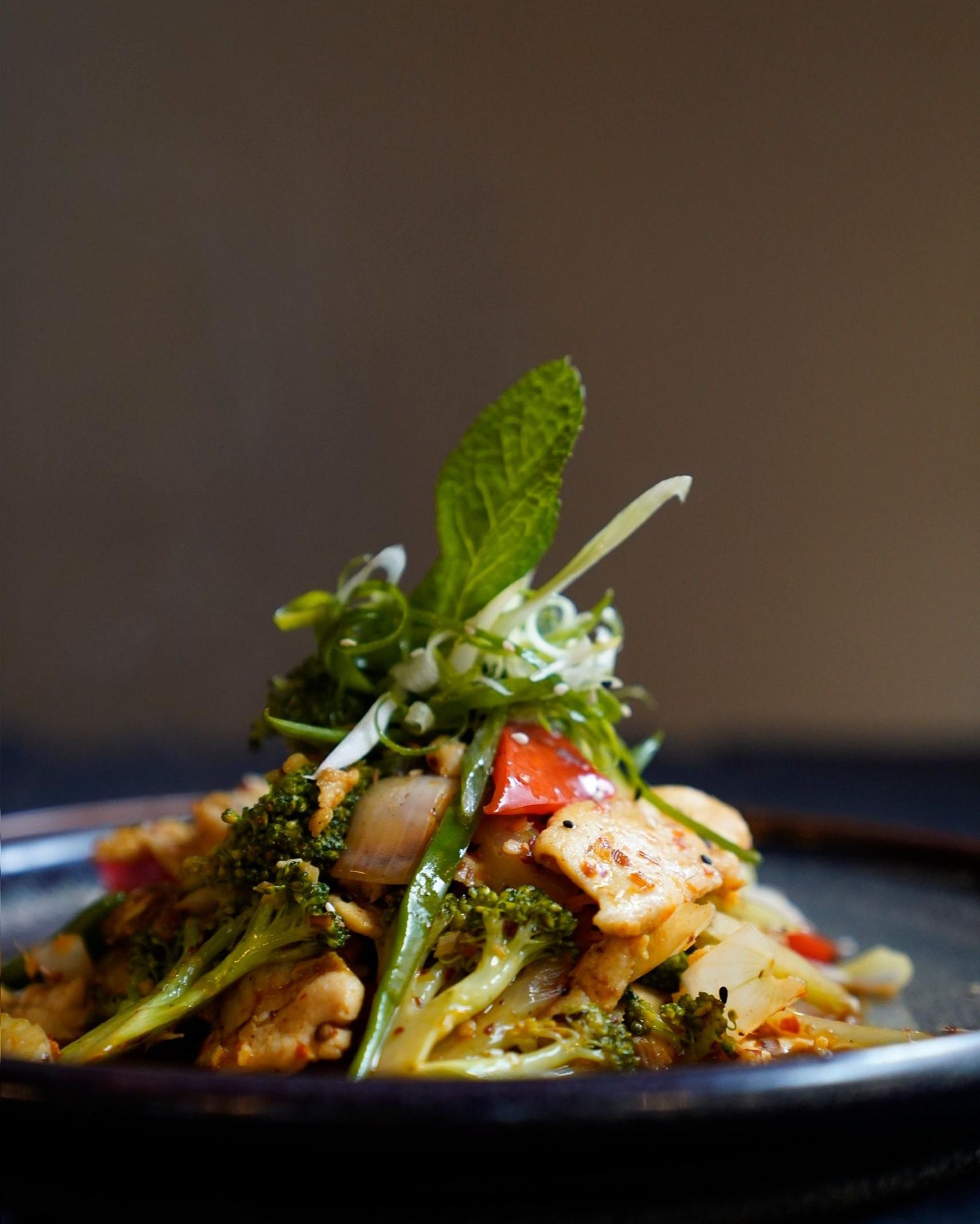
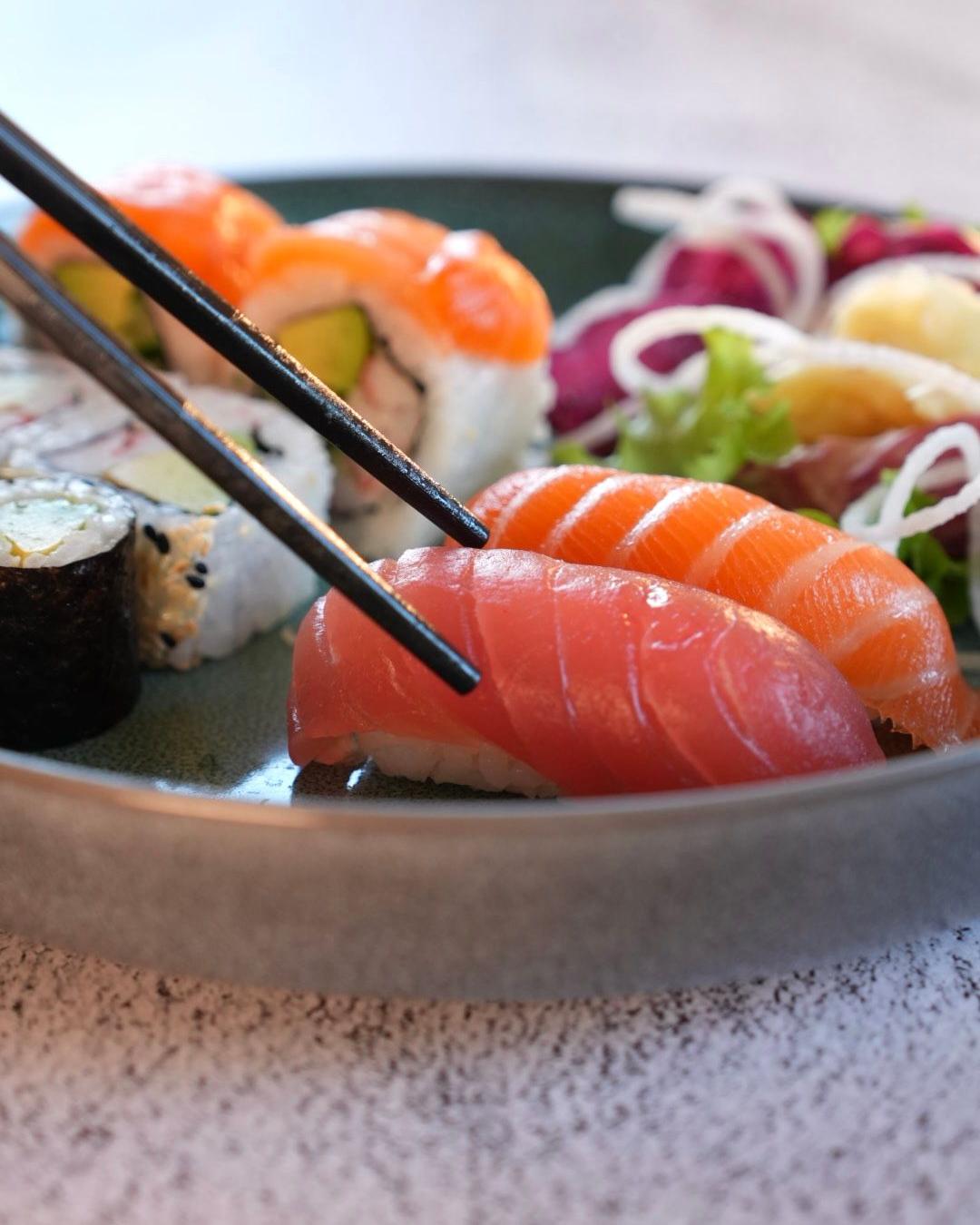
Typically Vietnamese at Mami Viet in Leipzig-Lindenau
At Mami Viet on Merseburger Str. 107, you’ll find Vietnamese cuisine in its fresh form – plus fresh sushi. The menu includes, among others:
- Pho 34 – rice noodle soup in a traditional broth made with ten spices (more here)
- Bun Bo Nam Bo – rice noodles with beef, salad and a house-made sauce
- Udon Xao – pan-fried udon noodles with Chinese cabbage and pak choi
- Poke bowl and sushi – fresh and light
This combination of Vietnamese cuisine and sushi is what makes Mami Viet special: you don’t have to choose between warm, savoury food and light sushi – here you get both under one roof. For an overview of everything, see our post on our specialties.
That’s exactly why Mami Viet is a good place to get to know Vietnamese cuisine: if you’re still unsure, start with a familiar dish like a noodle soup or a mild sushi roll and ease into new things. In a group, you can also order several dishes and share – so everyone tries a bit of everything. If you want to find out whether you enjoy raw fish, our post Raw fish: Matjes vs. sashimi helps you get started.
Vegan & vegetarian across the whole menu
Another advantage of fresh Vietnamese cuisine: it lends itself well to vegetarian and vegan versions. Many dishes come with a tofu option, and the Pho 34 even comes vegan with tofu and seitan. On top of that there are vegan salads and sushi options. All allergens are marked on the menu – more in our post on vegetarian food in Leipzig.
Where to eat Vietnamese in Leipzig
Mami Viet is located at Merseburger Str. 107, 04177 Leipzig, in Leipzig-Lindenau / Altlindenau, near Lindenauer Markt. We’re open daily from 11:00 a.m.–2:00 p.m. and 5:00 p.m.–10:00 p.m.
🅿️ There’s free parking directly in front of the restaurant – handy if you’re coming by car. You can pay by cash or card for bills of €20 or more, and you can reserve a table by phone at 0341 4925 2244, indoors or in the garden.
FAQ: Vietnamese, Thai & Chinese
What’s the difference between Vietnamese and Thai cuisine?
Vietnamese cuisine is usually fresher, lighter and more herb-forward, while Thai is often spicier and more intense with chilli, coconut milk and curry pastes.
Is Vietnamese food spicy?
Usually aromatic rather than spicy. If you’d like it hotter, just ask when ordering.
Is Vietnamese cuisine healthy or light?
It’s considered one of the lightest in Asia: lots of vegetables, fresh herbs, rice and rice noodles, little deep-frying. That’s why you usually feel pleasantly full after eating.
Which Asian cuisine is the least spicy?
Vietnamese cuisine tends to be milder and more aromatic than Thai. On request, almost anything can be ordered milder or spicier.
What is typically Vietnamese?
Dishes like pho (noodle soup), bun (rice noodles) and fresh spring rolls, with plenty of herbs and a balance of flavours.
Does Mami Viet also serve sushi?
Yes. Mami Viet combines Vietnamese cuisine with fresh sushi under one roof.
Are there vegetarian and vegan dishes?
Yes, many dishes come with tofu, plus vegan salads and sushi. Allergens are marked.
Is there free parking?
Yes, directly in front of the restaurant at Merseburger Str. 107.
Can you pay by card?
Yes, for bills of €20 or more.
Come eat Vietnamese at Mami Viet
Whether you want to get to know Vietnam’s fresh, herb-forward cuisine or simply eat well: at Mami Viet in Leipzig-Lindenau you get Vietnamese food and sushi under one roof – with free parking right outside the door.
We look forward to seeing you – your team at Mami Viet, Sushi & Asian Cuisine in Leipzig-Lindenau. As of: July 2026.
Mami Viet – Sushi & Asian Cuisine
Merseburger Str. 107, 04177 Leipzig (Lindenau / Altlindenau)
Phone: 0341 4925 2244
Website: restaurant-mamiviet.com
Opening hours: Mon–Sun 11:00 a.m.–2:00 p.m. & 5:00 p.m.–10:00 p.m.